The Yellowstone Caldera, often referred to simply as the Yellowstone Supervolcano, is a colossal volcanic caldera located predominantly in Yellowstone National Park in the United States. It represents one of the largest active volcanic systems on Earth, covering an area of about 30 miles by 45 miles (48 km by 72 km). The caldera was formed during massive volcanic eruptions, with the most recent occurring approximately 640,000 years ago. The Yellowstone Caldera is an integral part of the vast Yellowstone Hotspot, a geological phenomenon caused by the North American tectonic plate drifting over a mantle plume.
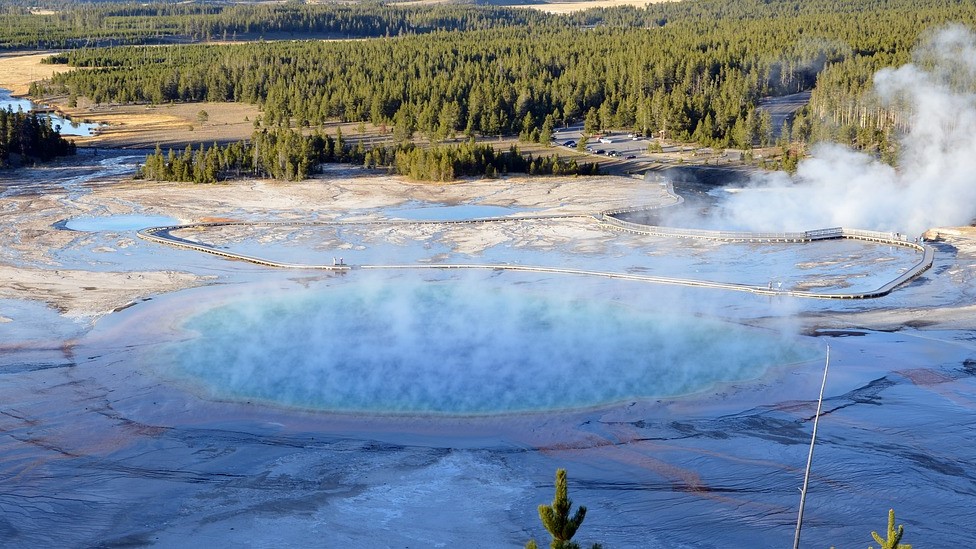
One of the distinctive features of the Yellowstone Caldera is its geothermal activity, evidenced by the numerous geysers, hot springs, and fumaroles found within Yellowstone National Park. Notable geothermal attractions such as Old Faithful, Grand Prismatic Spring, and Mammoth Hot Springs are manifestations of the immense heat generated beneath the Earth’s surface. The thermal activity is a result of the magma chamber that lies beneath the caldera, providing a fascinating glimpse into the powerful geological forces at play.
Despite its ominous-sounding moniker as a supervolcano, the Yellowstone Caldera is not currently showing signs of imminent eruption. The Yellowstone Volcano Observatory closely monitors the region for any signs of volcanic activity, employing various techniques such as seismic monitoring and gas emission measurements. Understanding the dynamics of the Yellowstone Caldera is crucial for assessing potential hazards and mitigating risks associated with future volcanic events in this geologically dynamic area.