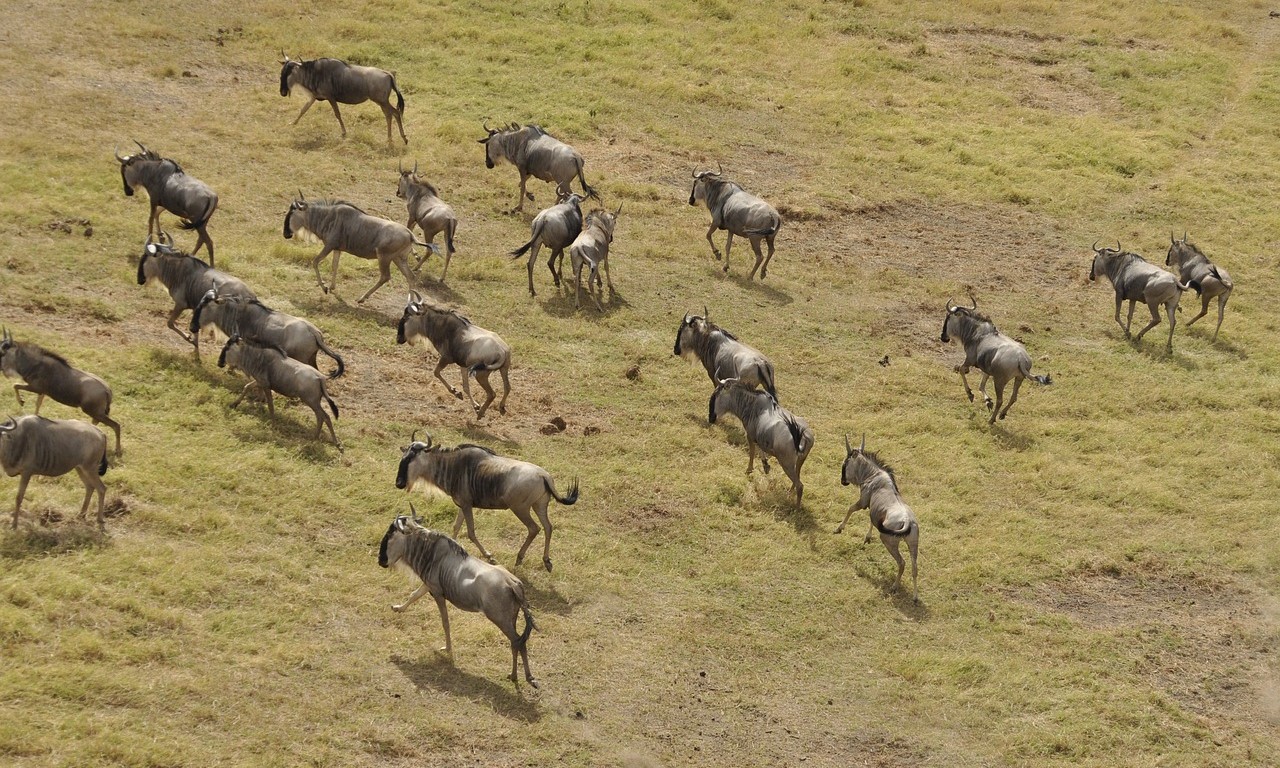
The wildebeest, also known as gnus, are a species of antelope found primarily in the grasslands and savannas of eastern and southern Africa. These large, robust animals are known for their distinctive appearance, characterized by a muscular build, a long, horse-like face, and curved horns. Wildebeests are highly social animals and often form large herds, particularly during their annual migration, which is one of the most spectacular wildlife events in the world.
The wildebeest migration, often dubbed the “Great Migration,” is a natural phenomenon that occurs annually in the Serengeti ecosystem of Tanzania and the Masai Mara National Reserve in Kenya. It involves the movement of over a million wildebeests, as well as zebras and other ungulates, in search of fresh grazing and water. This epic journey covers vast distances, with the herds crossing rivers, plains, and woodlands, facing numerous obstacles and predators along the way.
Despite their seemingly awkward appearance, wildebeests are well-adapted to their environment and play a crucial role in the ecosystem. As herbivores, they graze on grasses and other vegetation, helping to maintain the balance of plant populations and contributing to nutrient cycling. Additionally, wildebeests serve as prey for large carnivores such as lions, hyenas, and crocodiles, forming an essential part of the food chain in African ecosystems.