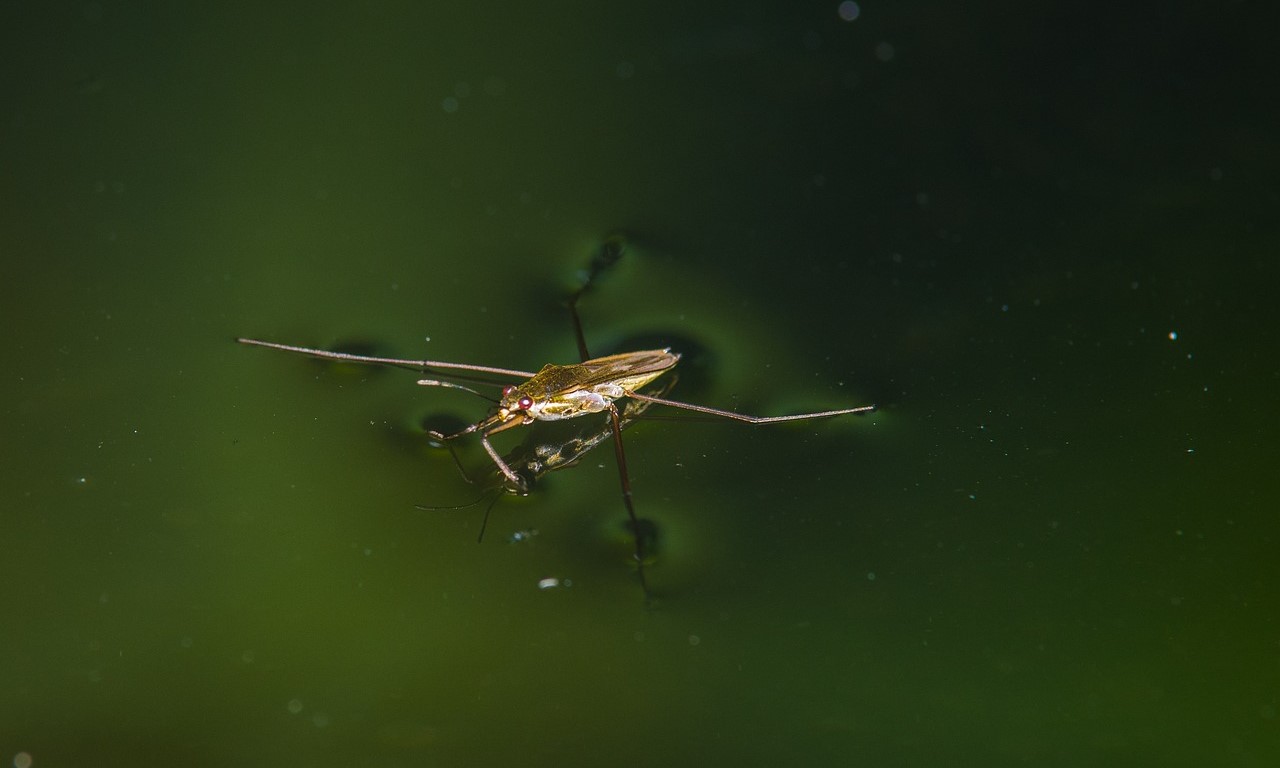
Water striders, also known as pond skaters or water bugs, are fascinating insects belonging to the family Gerridae, known for their ability to glide effortlessly across the surface of calm freshwater bodies such as ponds, lakes, and slow-moving streams. These remarkable insects are equipped with specialized adaptations that allow them to move across the water’s surface without breaking the surface tension. Their elongated legs, covered in tiny hairs or hydrophobic structures, distribute their weight evenly, effectively dispersing their mass and preventing them from breaking through the water’s surface.
One of the most intriguing aspects of water striders is their unique method of locomotion, which relies on the surface tension of water. By exerting downward pressure with their legs, water striders create dimples in the water’s surface, effectively anchoring themselves in place. They then use rapid, rhythmic movements of their middle and hind legs to propel themselves forward, skating across the water’s surface with remarkable agility and speed. This method of locomotion allows water striders to hunt for prey, evade predators, and navigate their aquatic habitats with ease.
Water striders are predatory insects, feeding primarily on small aquatic invertebrates and insects that become trapped on the water’s surface. They use their specialized front legs, equipped with sensitive hairs or spines, to detect vibrations produced by struggling prey. Once detected, water striders quickly seize their prey with their sharp, piercing mouthparts and inject digestive enzymes to break down their victims’ tissues. Despite their diminutive size, water striders play important roles in aquatic ecosystems, serving as efficient predators and contributing to the regulation of insect populations in freshwater habitats.