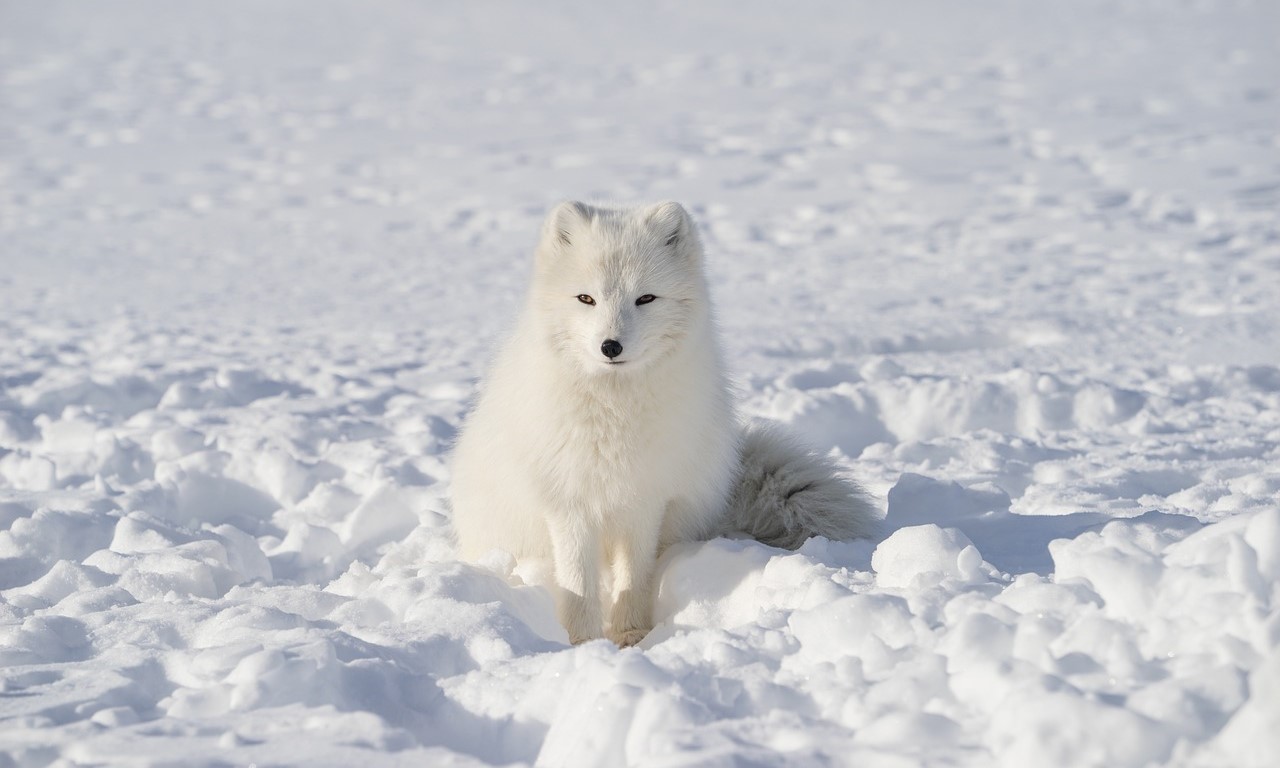
To know more about white foxes, let’s take a look at these 10 interesting facts about white foxes.

  1. Seasonal Camouflage: White foxes, also known as Arctic foxes, undergo a seasonal change in coloration. During winter, their fur is predominantly white to blend in with the snow, providing effective camouflage. In the warmer months, they molt into a brown or gray coat to better match the tundra and rocky landscapes.
  2. Adaptation to Extreme Cold: White foxes are uniquely adapted to survive in extremely cold climates. Their thick fur provides insulation, and they have furry paws and short ears to minimize heat loss. These adaptations allow them to endure temperatures as low as -58°F (-50°C).
  3. Resourceful Hunters: These foxes are skilled hunters with a diverse diet that includes small mammals, birds, fish, and scavenged carrion. They use their acute sense of hearing to locate prey beneath the snow, and their sharp claws help them dig for food.
  4. Long-Term Partnerships: White foxes are known for forming monogamous pairs that often mate for life. During the breeding season, which typically occurs in April or May, the female gives birth to a litter of adorable fox kits.
  5. Inhabiting Vast Territories: White foxes have vast home ranges, and their territories can span up to several square miles. The size of their territories depends on factors such as food availability and the population density of other foxes.
  6. Swimmers of the Arctic: Arctic foxes are excellent swimmers, and they are known to traverse icy waters in search of food. They can swim for long distances and have been observed swimming between Arctic islands.
  7. Diverse Vocalizations: White foxes communicate using a range of vocalizations, including barks, yips, and high-pitched screams. These vocalizations serve various purposes, such as signaling territory boundaries, attracting mates, or communicating with their offspring.
  8. Survival Instincts: When food is scarce, white foxes exhibit remarkable survival instincts. They are known to cache surplus food by burying it in the snow, creating hidden stashes to sustain them during lean periods.
  9. Lifespan in the Wild: In the wild, white foxes typically live around 3 to 4 years. However, their lifespan can be significantly longer in captivity, where they may reach up to 14 years.
  10. Cultural Significance: White foxes hold cultural significance in various indigenous societies. In some folklore, they are portrayed as clever and adaptable creatures, embodying the spirit of survival in harsh Arctic conditions. The fox’s elusive and enigmatic nature has also inspired stories and legends in the Arctic regions where they roam.

In the vast and frigid landscapes of the Arctic, the white fox, with its ethereal coat and ingenious adaptations, stands as a symbol of resilience and survival. Its ability to seamlessly transition between seasons, donning a coat of pure white in winter and a more subdued hue in summer, showcases nature’s artistry and the fox’s remarkable ability to adapt to its ever-changing environment. As skilled hunters and devoted partners, these foxes navigate the harsh tundra with grace, demonstrating an intrinsic connection to their surroundings.

Beyond their physical prowess, white foxes have woven themselves into the fabric of cultural lore, embodying traits of cleverness and endurance in the face of adversity. Whether silently traversing the Arctic expanse or leaving a trace of their enchanting presence in folklore, the white fox remains an emblem of the wild, mysterious beauty that characterizes the northernmost reaches of our planet.