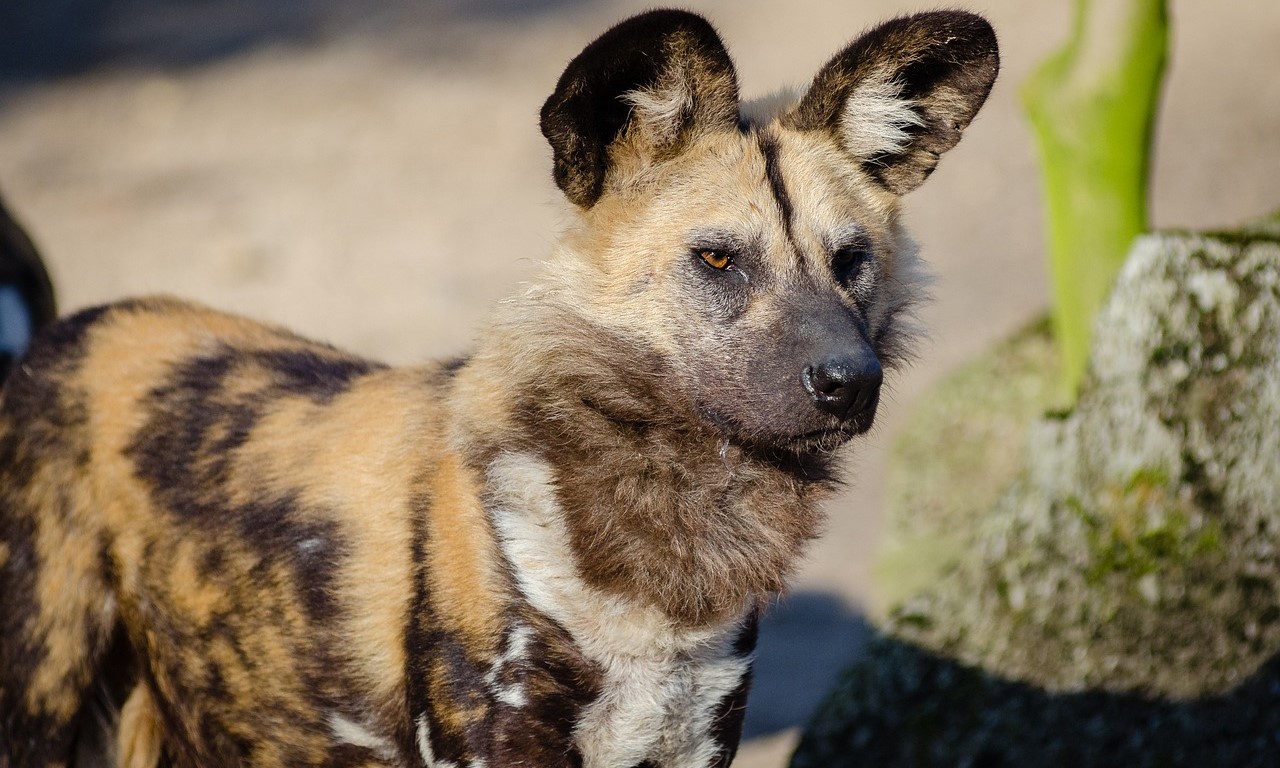
Wild dogs, also known as painted wolves or African wild dogs, are highly social and cooperative carnivores native to sub-Saharan Africa. They are known for their striking coat patterns, which resemble a colorful mosaic of black, brown, white, and yellow patches. Unlike domestic dogs, wild dogs have only four toes per foot, and their large rounded ears aid in heat dissipation.
Wild dogs are renowned for their complex social structure and cooperative hunting behavior. They live in packs led by an alpha breeding pair, which are usually the only individuals allowed to breed. Pack members exhibit strong bonds and cooperation, working together to hunt prey, care for pups, and defend territory. Cooperative hunting allows wild dogs to take down large prey such as antelopes and wildebeests, making them highly successful predators.
Despite their prowess as hunters, wild dogs face numerous threats to their survival. Habitat loss, human-wildlife conflict, poaching, and diseases such as canine distemper and rabies have all contributed to declining wild dog populations. Conservation efforts, including habitat protection, anti-poaching measures, and captive breeding programs, are crucial for safeguarding the future of these charismatic and endangered carnivores.