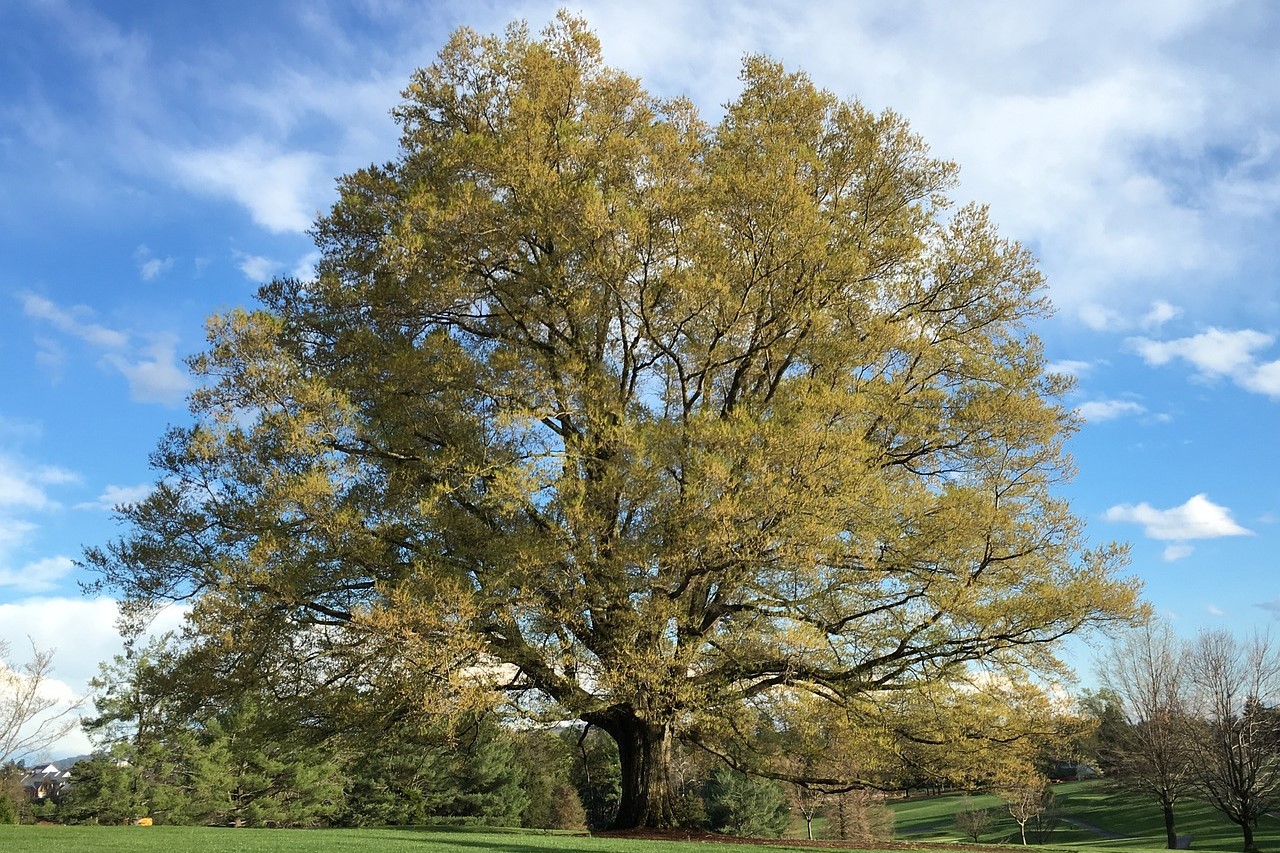
White oak trees (Quercus alba) are majestic hardwood trees native to eastern North America, known for their stately appearance, strong wood, and valuable ecological roles. These iconic trees can reach impressive heights of up to 100 feet (30 meters) tall and have a wide spreading canopy, creating a commanding presence in their forest habitats. White oak trees are renowned for their longevity, with some specimens living for several centuries.
One of the distinguishing features of white oak trees is their distinctive leaves, which are lobed with rounded ends and a pale underside. In the fall, these leaves turn a rich golden-brown color before dropping in preparation for winter. White oak trees are also known for their acorns, which serve as an important food source for numerous wildlife species, including birds, mammals, and insects.
The wood of white oak trees is highly prized for its strength, durability, and attractive grain patterns, making it a popular choice for a wide range of woodworking projects. From furniture and flooring to barrels for aging wine and whiskey, white oak wood is valued for its versatility and resilience. Additionally, white oak trees play crucial ecological roles, providing habitat and food for wildlife, stabilizing soil, and contributing to the overall health and biodiversity of forest ecosystems. Despite facing threats from habitat loss, climate change, and diseases such as oak wilt, efforts to conserve and protect white oak trees are essential for preserving their ecological and cultural significance for future generations.