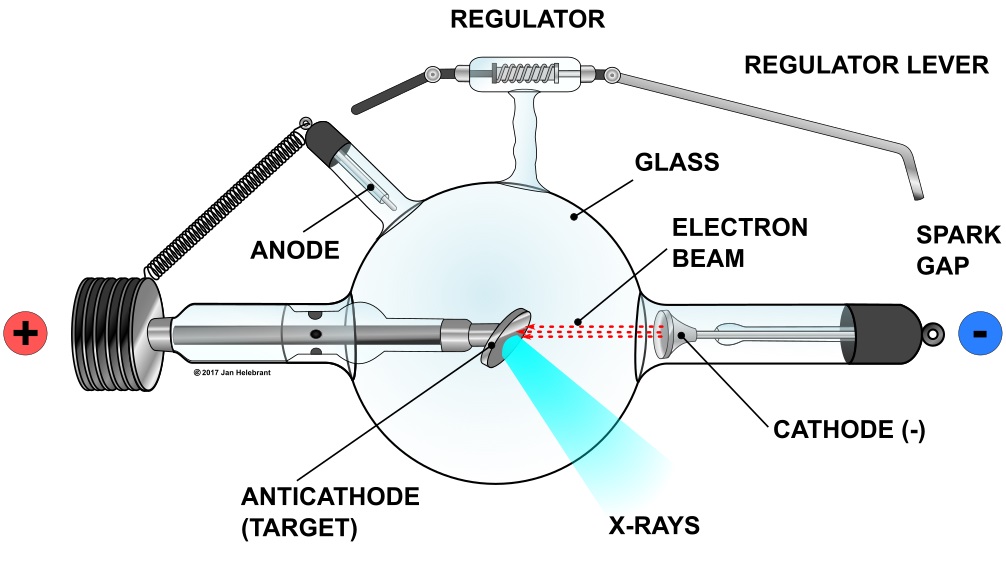
X-rays are a form of electromagnetic radiation with wavelengths shorter than those of visible light. Discovered by Wilhelm Roentgen in 1895, X-rays have since become an invaluable tool in various scientific, medical, and industrial applications. Their ability to penetrate matter makes them particularly useful for imaging the internal structures of objects.
In medicine, X-rays are commonly employed for diagnostic imaging. X-ray machines generate a controlled burst of radiation that passes through the body, creating an image on a detector or film. This allows healthcare professionals to visualize the internal structures of bones, organs, and tissues, aiding in the diagnosis and treatment of various medical conditions. Computed Tomography (CT) scans, which utilize X-rays from multiple angles to create detailed cross-sectional images, are another advancement in medical imaging technology.
Beyond healthcare, X-rays play a crucial role in industrial inspection and security screening. They are utilized to examine the integrity of materials, such as welds in metal structures, and to detect hidden objects or substances in security checks at airports and other high-security areas. X-ray crystallography is a powerful technique in chemistry and biology that uses X-rays to determine the three-dimensional arrangement of atoms within a crystal, providing insights into molecular structures and aiding drug development and material science research.