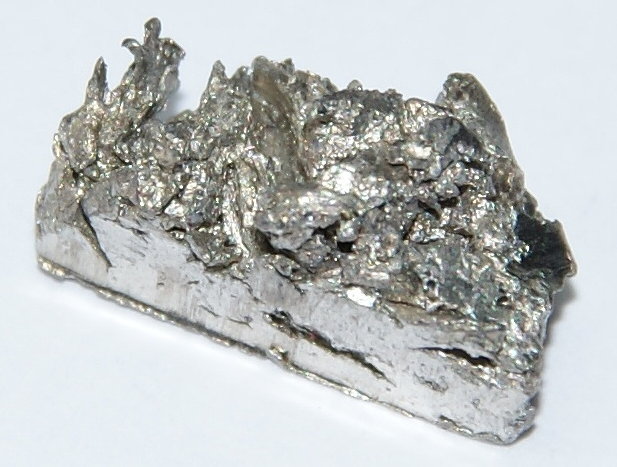
Do you want to know more about ytterbium? Here are 10 interesting facts about ytterbium to know more about it.

  1. Rare Earth Element: Ytterbium belongs to the lanthanide series, a group of rare earth elements. These elements share similar chemical properties and are often found together in nature.
  2. Discovery in Gadolinite: Ytterbium was first discovered in 1878 by Swiss chemist Jean Charles Galissard de Marignac. He isolated the element from the mineral gadolinite, which also yielded other rare earth elements.
  3. Named after Ytterby: Ytterbium is named after the Swedish village of Ytterby, which has been a notable source of rare earth minerals. Several other elements, including yttrium and erbium, are also named after this village.
  4. Soft and Malleable: Ytterbium is a soft, malleable, and ductile metal. It can be easily cut with a knife and has a bright, silvery appearance.
  5. Least Reactive Lanthanide: Among the lanthanides, ytterbium is one of the least reactive metals. It is stable in dry air but can tarnish when exposed to moist air.
  6. Optical Properties: Ytterbium has interesting optical properties, including the ability to absorb and re-emit light efficiently. These characteristics make it valuable in the development of lasers and certain optical devices.
  7. Laser Applications: Ytterbium is commonly used in solid-state lasers. Its energy levels allow for the efficient absorption and emission of light, making it suitable for various laser applications in industry and research.
  8. Nuclear Medicine: Ytterbium-169, a radioactive isotope of ytterbium, is used in brachytherapy for treating certain cancers. The beta particles emitted during the radioactive decay provide targeted radiation therapy to cancerous tissues.
  9. High Thermal Neutron Capture: Ytterbium has a high thermal neutron capture cross-section, making it useful in nuclear reactors for controlling the rate of fission reactions.
  10. Isotopes and Stability: Ytterbium has a range of stable isotopes, with ytterbium-174 being the most abundant. The stable isotopes, along with its radioactive isotopes, contribute to the element’s versatility in various scientific and industrial applications.

Ytterbium, a member of the rare earth elements, stands as a versatile and fascinating metal with diverse applications in both technology and medicine. Named after the Swedish village of Ytterby, its discovery marked a significant contribution to our understanding of the lanthanide series. Ytterbium’s unique combination of optical properties, including its efficiency in absorbing and emitting light, has made it invaluable in the development of lasers and optical devices.

From its role in nuclear medicine, utilizing ytterbium-169 for targeted cancer therapy, to its application in controlling fission reactions in nuclear reactors, this element has proven its significance in various scientific and industrial realms. Ytterbium continues to captivate researchers and innovators alike, showcasing the enduring allure of rare earth elements in advancing technological frontiers and improving medical treatments.