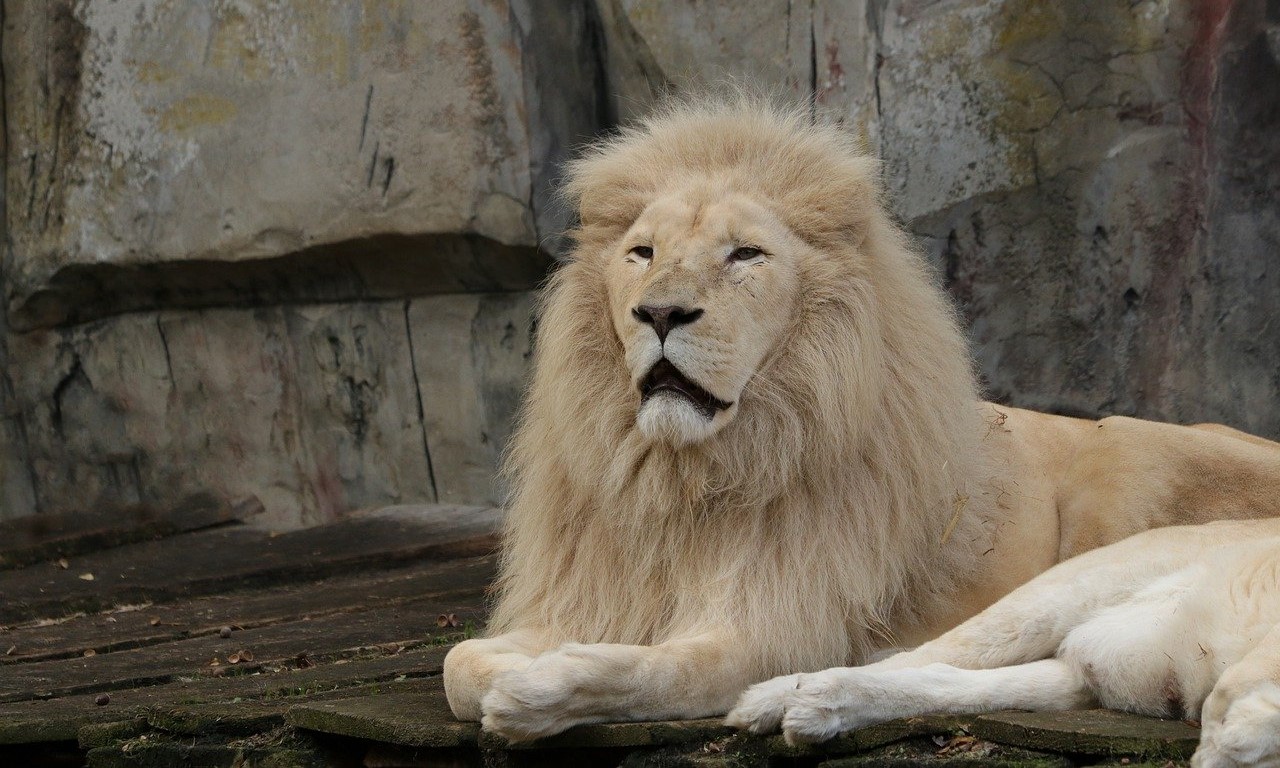
White lions are a rare color mutation of the African lion (Panthera leo), characterized by their distinctive pale fur. Their unique appearance is caused by a recessive gene known as leucism, which affects the production of pigment in the skin and fur, resulting in white or pale coloration. Unlike albino animals, white lions retain their normal eye color, ranging from blue to green or gold, and their skin may have a pinkish hue due to reduced melanin production.
White lions are native to the Greater Timbavati region in South Africa, where they were historically revered as sacred animals by local tribes. Due to their rarity and cultural significance, they have become the subject of fascination and conservation efforts around the world. However, their population in the wild is extremely small, with estimates suggesting that only a few dozen individuals remain.
In recent years, white lions have faced numerous threats to their survival, including habitat loss, poaching, and human-wildlife conflict. Conservation organizations and wildlife sanctuaries are working tirelessly to protect and preserve these majestic animals through habitat restoration, anti-poaching initiatives, and public awareness campaigns. Despite the challenges they face, white lions serve as powerful ambassadors for conservation, inspiring efforts to safeguard their future and the biodiversity of their native ecosystems.