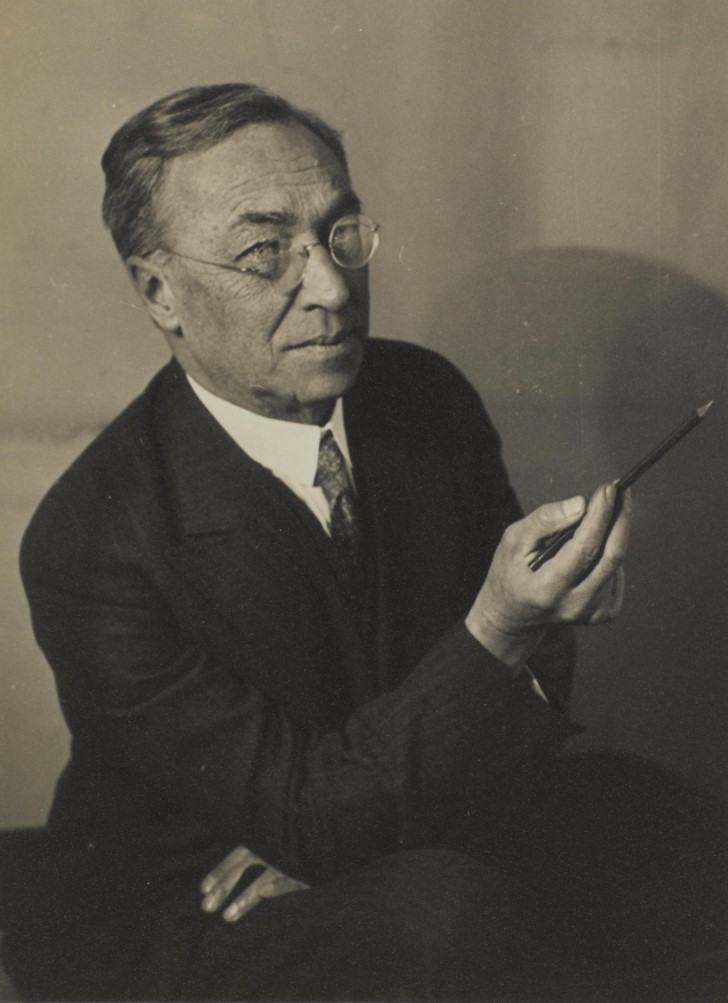
If you are interested to know more about Wassily Kandinsky, it’s surely a good idea to look at these 10 interesting facts about Wassily Kandinsky.

  1. Synesthesia : Kandinsky experienced synesthesia, a condition where one sensory experience triggers another, such as seeing colors when hearing music. This phenomenon greatly influenced his art, leading him to explore the connections between color, form, and emotion.
  2. Early Career : Before pursuing art full-time, Kandinsky trained as a lawyer and economist. He didn’t begin painting seriously until he was in his 30s, attending art school in Munich.
  3. Blue Rider Group : Kandinsky was a founding member of the Blue Rider (Der Blaue Reiter) group, an influential association of artists formed in Munich in 1911. The group aimed to explore spiritual and emotional dimensions in art and included prominent artists such as Franz Marc and Gabriele Münter.
  4. Abstract Art Pioneer : Kandinsky is often credited as one of the first artists to create purely abstract paintings. His groundbreaking works, such as “Composition VII” (1913) and “Yellow-Red-Blue” (1925), exemplify his revolutionary approach to art.
  5. Art Theory : Kandinsky wrote extensively on art theory and aesthetics. His seminal book “Concerning the Spiritual in Art” (1911) explored the relationship between art, spirituality, and the inner world of the artist.
  6. Russian Heritage : Although Kandinsky spent much of his adult life in Germany, he maintained strong ties to his Russian heritage. He returned to Russia briefly after the outbreak of World War I and was involved in the Russian art scene.
  7. Bauhaus : In 1922, Kandinsky joined the faculty of the Bauhaus school of art and design in Weimar, Germany, where he taught alongside other influential artists such as Paul Klee and Lyonel Feininger. His tenure at the Bauhaus marked a significant period of his career.
  8. Geometric Abstraction : Kandinsky’s later works embraced geometric abstraction, characterized by simplified forms and bold colors. His compositions often featured geometric shapes arranged in dynamic compositions, reflecting his ongoing exploration of visual harmony and balance.
  9. Exhibition Organizer : Kandinsky organized several groundbreaking art exhibitions, including the first Blaue Reiter exhibition in 1911 and the “First Phalanx Exhibition” in 1912. These exhibitions showcased the work of avant-garde artists and played a vital role in promoting modern art in Europe.
  10. Legacy : Kandinsky’s legacy continues to influence artists and scholars worldwide. His innovative approach to abstraction, bold use of color, and profound exploration of the spiritual dimensions of art have left an indelible mark on modern art history, inspiring generations of artists to push the boundaries of artistic expression.

Wassily Kandinsky’s legacy as a pioneering figure in abstract art is profound and enduring. His revolutionary exploration of color, form, and emotion reshaped the artistic landscape of the 20th century and continues to inspire artists and art enthusiasts today. Through his innovative compositions and groundbreaking theories on art and spirituality, Kandinsky challenged conventional notions of representation and paved the way for the emergence of new artistic movements.

His contributions to the Blue Rider group, his influential tenure at the Bauhaus, and his prolific body of work have solidified his place as one of the most significant artists of the modern era. Kandinsky’s bold experimentation and unwavering commitment to artistic expression have left an indelible mark on the art world, ensuring that his legacy will continue to captivate and inspire generations to come.