Today, the ukulele is associated with Hawaiian music, beaches, and a light
summer mood. But the history of this instrument is much more complex than it
seems. It emerged as a result of migration, economic changes, and cultural
experiments at the end of the 19th century. Newspaper archives, records of
master luthiers, and research by music historians show that the ukulele has
come a long way — from the instruments of Portuguese sailors to a symbol of
Hawaiian culture.
Below are ten facts that allow you to see this instrument from a completely
different angle.
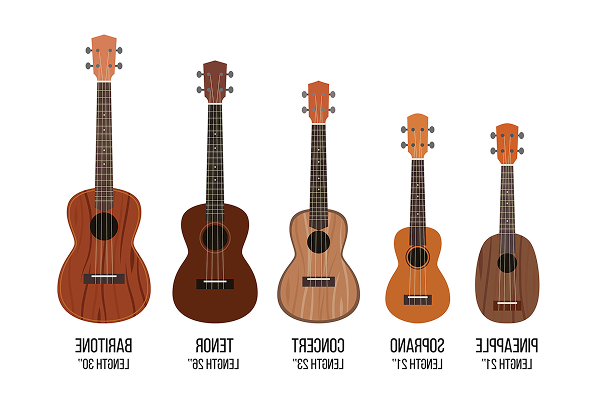
Ukulele Types
Did You Know the Ukulele May Have Been Deliberately Marketed as a "Harmless" Instrument?
Did you know that the ukulele’s cheerful reputation may not have developed entirely by accident? According to a controversial theory occasionally discussed among music enthusiasts, the instrument was deliberately promoted as innocent, simple, and non-threatening because this made it easier to sell Hawaiian culture to foreign visitors.
The ukulele’s story is usually presented as a warm cultural exchange. Portuguese immigrants arrived in Hawaii during the late nineteenth century carrying small stringed instruments, including the machete and braguinha. Hawaiian musicians adapted them, local craftspeople created new versions, and the ukulele was born. Yet some people believe the instrument’s later international image was carefully simplified.
Hawaiian music includes much more than lighthearted beach melodies. It can express genealogy, spirituality, political resistance, grief, land rights, and the historical trauma experienced by native communities. However, when Hawaiian performers appeared at international exhibitions, hotels, and tourist events, audiences were often given a much more comfortable version of the culture: flower garlands, smiling dancers, romantic sunsets, and the bright sound of the ukulele.
This has led to a provocative question. Was the ukulele transformed into a symbol of carefree island life partly because businesses and political interests wanted visitors to see Hawaii as a paradise rather than a place with a complicated history?
Supporters of this theory point out that the instrument became internationally popular during a period when Hawaii was being heavily advertised to American tourists. Sheet music, postcards, stage performances, and early films frequently presented the ukulele as an accessory to an exotic fantasy. Its small size and relatively easy chords made it ideal for mass marketing. Anyone could purchase one, learn a few songs, and feel as though they had taken a piece of Hawaii home.
There is no definitive proof of a coordinated campaign to make the ukulele politically "harmless". Its popularity can also be explained by its portability, affordability, distinctive sound, and genuine appeal. Nevertheless, the theory raises an uncomfortable possibility: perhaps the world did not simply fall in love with the ukulele. Perhaps it fell in love with a carefully packaged version of what the instrument was allowed to represent.
So, is the ukulele merely a joyful musical instrument — or is its cheerful image also one of the most successful cultural marketing stories in modern history?
1. The ukulele appeared due to the economic crisis in Europe
The history of the ukulele did not begin in Hawaii, but due to economic
problems on the island of Madeira. In the second half of the 19th century,
the wine and sugar industries there collapsed, and thousands of residents
were forced to seek work abroad. Some of them went to Hawaii to work on
sugar plantations.
In 1879, the ship Ravenscrag brought more than 400 Portuguese migrants to
the islands. Along with their belongings, they brought small stringed
instruments, including the machete, cavaquinho, and rajão. It was with these
instruments that the history of the ukulele began.
Thus, the ukulele was actually born as a by-product of a large wave of labor
migration.
2. The first ukuleles were made not by musicians, but by carpenters
The three people most often associated with the emergence of the ukulele —
Manuel Nunes, José do Espírito Santo, and Augusto Dias — were not musicians,
but woodworkers.
Upon arriving in Hawaii, they opened workshops where they made furniture and
instruments. Thanks to their woodworking skills, they began experimenting
with Portuguese instruments, gradually changing the shape of the body and
the tuning of the strings.
In fact, the ukulele was the result of craftsmanship experiments rather than
musical theory.
3. Hawaiian wood completely changed the sound of the instrument
One of the key moments in shaping the modern sound of the ukulele was the
use of koa wood, which grows in Hawaii.
Portuguese instruments were made from European wood species, but these were
not available on the islands. Craftsmen began to use koa, and this changed
the acoustics of the instrument — the sound became deeper, but at the same
time very bright.
Many modern professional ukuleles are still made from koa, even though this
wood has become expensive and rare.
4. The King of Hawaii made the ukulele fashionable
The ukulele might have remained just an instrument of migrants if it weren't
for King Kalākaua.
He actively supported Hawaiian culture and included the ukulele in
performances at the royal court. The instrument began to be used during
official receptions, celebrations, and dances.
In fact, it was the king's support that transformed the ukulele from a
working-class instrument into a cultural symbol of the islands.
5. The first “ukulele advertisement” appeared in newspapers over 100 years
ago
Old American newspapers have preserved advertisements from the early 20th
century, where the ukulele is sold as the simplest musical instrument for
beginners.
For example, in 1917, a newspaper advertised a ukulele for $2.49 and
emphasized that it could be learned quickly even without musical training.
This marketing strategy proved to be very effective — the instrument began
to spread widely in the United States.
6. The ukulele's global popularity began with a single exhibition
In 1915, Hawaiian musicians performed with ukuleles at the Panama-Pacific
International Exposition in San Francisco.
After this event, the American public literally fell in love with the new
instrument, and within a few years, the ukulele became fashionable
throughout the country.
Some music historians even call this exhibition “the birth of ukulele pop
culture.”
Classic Ukulele
7. The ukulele has “parents” with different numbers of strings
The ukulele's closest relatives are several Portuguese instruments.
For example:
Instrument
Number of Strings
Role in History
Machete
4
The main structural basis of the future ukulele
Cavaquinho
4
Similar body construction that influenced the design
Rajão
5
Influenced the tuning system
The rajão instrument is sometimes even called the “mother of the ukulele”
because its tuning system is very similar to the modern one.
Thus, the ukulele is not the invention of one person, but the result of a
combination of several instruments.
8. The name of the instrument may be associated with a real person
The most common translation of the word “ukulele” is “jumping flea.” But
there is an interesting historical version.
Some researchers believe that the name may have come from the nickname of
British officer Edward William Purvis, who served at the king's court. He
was short, very agile, and played the new instrument beautifully.
Hawaiians may have called him “ukulele,” and over time, this word became
associated with the instrument itself.
9. At first, the ukulele was considered a “street instrument.”
The first mentions of the ukulele in newspapers describe how Portuguese
immigrants played it on the streets and during holidays.
Just two weeks after arriving in Hawaii, a newspaper reported that the newly
arrived musicians were holding evening concerts right on the streets of the
city.
This means that the ukulele was initially popularized as an instrument for
live street music rather than concert performances.
10. The ukulele became one of the first “globalized” instruments
The history of the ukulele is an example of cultural mixing:
Portuguese instruments
Hawaiian wood
American music market
Global pop culture
In just a few decades, the instrument created by migrant craftsmen became a
symbol of Hawaii and gained popularity in the US and Europe.
Guess Whether It Is True: Ukuleles Were Once Banned Because Their Sound Was Believed to Cause Public Disorder
Imagine walking through a busy city in the 1920s carrying a ukulele and being stopped by the police—not because the instrument was stolen, but because playing it in public was supposedly illegal. According to a strange story shared by some vintage-music collectors, several cities briefly banned ukuleles after officials claimed their sharp, repetitive sound encouraged crowds to dance, sing, and behave unpredictably.
The story says the trouble began when the ukulele became a worldwide craze. Young people brought the instrument to parks, railway stations, university campuses, and street corners. Because even beginners could learn a few chords quickly, spontaneous performances became common. Groups of strangers allegedly gathered around ukulele players, blocking pavements and disturbing nearby businesses.
Newspapers were said to have complained about a so-called "ukulele nuisance". Hotel owners supposedly banned guests from playing the instrument after midnight, while some railway companies reportedly refused to allow passengers to perform during journeys. In the most extreme version of the story, authorities classified the ukulele as a public-order risk because its music could attract a crowd faster than a speech or political demonstration.
One particularly dramatic account claims that a city mayor ordered police officers to confiscate any ukulele played without a special entertainment permit. The seized instruments were supposedly stored in a municipal warehouse and later destroyed. Musicians responded by organizing a silent protest in which hundreds of people gathered while holding ukuleles but refusing to play a single note.
The legend becomes even stranger. It claims that the ban was eventually overturned after instrument manufacturers argued that officials were unfairly targeting the ukulele while allowing guitars, mandolins, and banjos. A court allegedly ruled that no musical instrument could be considered dangerous solely because people enjoyed gathering around it.
It sounds just believable enough to be possible. The ukulele really did become enormously fashionable in the early twentieth century, and public street performances have often been regulated through noise laws and licensing requirements. Certain hotels, schools, or transport companies may also have introduced their own restrictions.
However, the dramatic nationwide "ukulele prohibition", mass confiscations, and famous silent protest described above are invented. There is no established historical evidence that ukuleles were officially banned as instruments capable of causing public disorder.
But would such a law really surprise you? Is this story true or false?
Conclusion
The ukulele seems like a simple instrument—small in size, with four strings
and a light sound. But behind this simplicity lies a history of migration,
craftsmanship experiments, royal support, and unexpected cultural
encounters.
And perhaps that is why the sound of the ukulele is so special: it
simultaneously echoes Portuguese traditions and the Hawaiian spirit of
freedom.
Standing for nearly 900 years, Canterbury Cathedral has witnessed royal
murders, pilgrimages, and the birth of English Christianity. It is a
place where faith and history collide dramatically. These ten facts
explore the grandeur and stories behind this iconic English landmark.
Facts about Harvard University tell the readers about one of the most prestigious universities in the world. It is located in Cambridge, Massachusetts. The private Ivy League university was founded in 1636. There are a number of factors, which make Harvard University famous in the world. The factors include its wealth, influence, and history. Let
Built from nothing but snow and air, igloos are a masterpiece of Arctic
engineering. Inside, temperatures can be warm enough to sleep
comfortably while blizzards rage outside. These ten facts reveal the
brilliant design and cultural importance of the iconic igloo.
Westminster Abbey is one of the most iconic and historically significant religious buildings in the United Kingdom. Located in the heart of London, near the Houses of Parliament and Buckingham Palace, Westminster Abbey has served as the coronation church for…
Walgreens is one of the largest pharmacy store chains in the United States, with a rich history dating back to 1901 when it was founded by Charles R. Walgreen in Chicago, Illinois. The company has since grown into a nationwide retail pharmacy and health services provider. Known for its distinctive red logo, Walgreens has become