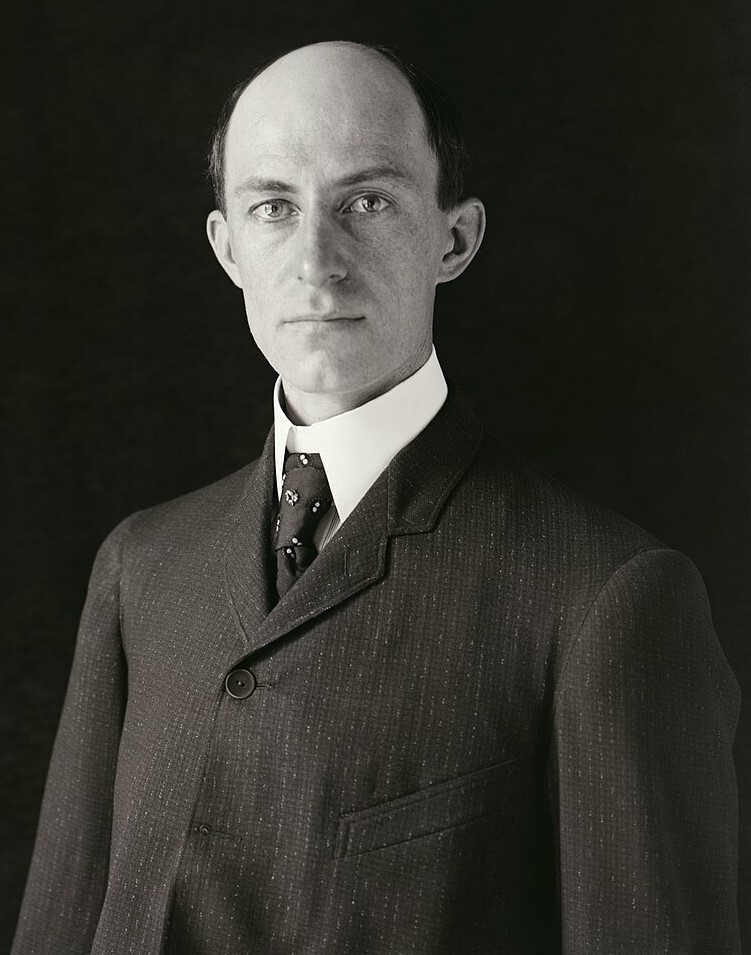
Wilbur Wright, along with his brother Orville Wright, is renowned as one of the pioneering figures in aviation history. Born on April 16, 1867, in Millville, Indiana, Wilbur demonstrated an early interest in mechanical devices and aviation. Alongside Orville, he embarked on a journey to unlock the secrets of powered flight, ultimately achieving one of the most significant technological advancements of the 20th century.
The Wright brothers’ fascination with flight was ignited by the works of aviation pioneers such as Otto Lilienthal and Octave Chanute. They conducted extensive research and experimentation, developing their understanding of aerodynamics and propulsion. In 1903, at Kitty Hawk, North Carolina, Wilbur and Orville achieved their historic milestone by successfully piloting the first powered, controlled, and sustained flight in a heavier-than-air aircraft, the Wright Flyer.
Wilbur Wright’s contributions to aviation extended beyond the historic flight at Kitty Hawk. Alongside Orville, he continued to refine their aircraft designs, making significant advancements in flight control, stability, and maneuverability. Their innovative approach to aviation laid the groundwork for the development of modern aircraft, shaping the course of transportation, exploration, and technology in the years to come. Wilbur Wright’s legacy as a pioneer of flight endures, inspiring generations of aviators and engineers to reach for the skies and push the boundaries of what is possible.